What is AVPU or ACVPU?
The AVPU scale is a simple method used to quickly assess a casualty’s level of consciousness or responsiveness during an emergency. It allows first aiders, healthcare professionals and emergency responders to rapidly identify whether a casualty is alert, responding appropriately or showing signs of deterioration.
The assessment forms part of the primary survey (ABCDE assessment) and is taught on many recognised first aid and pre-hospital care qualifications.
What Does AVPU Stand For?
A – Alert
The casualty is awake, aware of their surroundings and able to answer questions or follow simple commands appropriately.
V – Responds to Voice
The casualty is not fully alert but responds when spoken to. They may open their eyes, answer questions, make sounds or obey simple instructions after hearing your voice.
P – Responds to Pain
The casualty does not respond to verbal communication but responds to an appropriate painful stimulus. This indicates a significantly reduced level of consciousness and requires urgent medical assessment.
U – Unresponsive
The casualty shows no response to verbal or painful stimuli. An unresponsive casualty should be treated as a medical emergency and their airway, breathing and circulation assessed immediately.
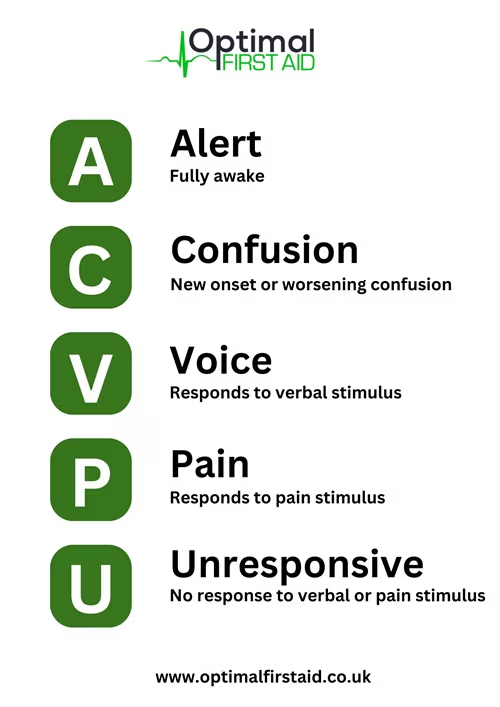
What is ACVPU?
The traditional AVPU scale has been updated in many healthcare settings to become ACVPU, with the addition of C – New Confusion.
This change reflects growing evidence that new-onset confusion is often an early indicator of serious illness or clinical deterioration, even when a casualty appears awake and alert.
ACVPU Stands For
- A – Alert
- C – New Confusion
- V – Responds to Voice
- P – Responds to Pain
- U – Unresponsive
The addition of Confusion helps first aiders and healthcare professionals recognise patients who may require urgent assessment before they deteriorate further.
When is the AVPU or ACVPU Scale Used?
The AVPU or ACVPU assessment is commonly used during the primary survey to rapidly assess a casualty’s neurological status.
It is used by:
- Workplace first aiders
- Outdoor first aiders
- Ambulance clinicians
- Emergency responders
- Event medical teams
- Remote medics
- Hospital staff
- Military medics
Because it can be completed in seconds, it helps identify casualties who require urgent intervention or rapid escalation to emergency services.
How to Perform an AVPU Assessment
A rapid assessment should take only a few seconds.
Step 1 – Is the casualty alert?
Can they speak normally?
Do they know who they are?
Can they follow simple instructions?
If yes, they are Alert.
Step 2 – Speak to the casualty
If they are not fully alert, speak clearly.
For example:
“Can you hear me?”
“Open your eyes.”
“Can you squeeze my hand?”
If they respond only after hearing your voice, they are Responds to Voice.
Step 3 – Apply an Appropriate Pain Stimulus
If there is no response to voice, an appropriately trained clinician may use an appropriate painful stimulus as part of an assessment.
If they respond only to pain, record Responds to Pain.
Step 4 – No Response
If there is no response to voice or pain, the casualty is Unresponsive.
Immediately assess:
- Airway
- Breathing
- Circulation
Follow current Resuscitation Council UK guidance and call 999.
Example of Using AVPU
You arrive at a casualty who has collapsed at work.
They have their eyes closed.
You ask,
“Can you hear me?”
The casualty opens their eyes and answers slowly.
They are recorded as:
V – Responds to Voice
Although they have responded, this is not normal and they require further assessment.
Example of ACVPU
You arrive to find an elderly person who is awake but suddenly cannot recognise family members and is speaking incoherently.
Although they are awake, they have developed new confusion.
They should be recorded as:
C – New Confusion
This may indicate serious illness requiring urgent medical assessment.
Why is New Confusion Important?
Sudden confusion should never be dismissed as “just being tired” or “old age.”
It can be an early sign of serious medical conditions including:
- Stroke
- Sepsis
- Low blood sugar (Hypoglycaemia)
- Head injury
- Lack of oxygen (Hypoxia)
- Serious infection
- Drug or alcohol intoxication
Recognising new confusion early can help ensure the casualty receives prompt treatment before their condition worsens.
AVPU is Only One Part of Patient Assessment
The AVPU or ACVPU scale does not diagnose illness.
It simply provides a rapid assessment of a casualty’s responsiveness.
A full assessment should always consider:
- Airway
- Breathing
- Circulation
- Disability
- Exposure
- Vital signs
- Mechanism of injury
- Medical history
Experienced first aiders continually reassess the casualty, as their level of consciousness can change rapidly.
Learn Patient Assessment Properly
Understanding what AVPU stands for is only the beginning.
During our practical first aid courses you’ll learn how to:
- Assess casualties confidently using the primary survey
- Recognise early signs of deterioration
- Identify life-threatening conditions
- Communicate effectively with emergency services
- Reassess casualties and recognise changes in condition
- Make safe, informed decisions while waiting for professional help
These skills are taught through realistic scenarios, practical exercises and instructor-led coaching rather than simply learning acronyms.
You can develop these skills on our:
- Emergency First Aid at Work (EFAW) course
- First Aid at Work (FAW) course
- Outdoor First Aid course
- FREC 3 (First Response Emergency Care) course
Whether you are learning first aid for the workplace or progressing towards pre-hospital emergency care, understanding casualty assessment is one of the most valuable skills you will develop.
Real-World Experience Matters
A casualty’s condition can change quickly.
Someone who appears alert when you first arrive may become confused or only respond to voice within minutes.
Throughout my career working in military, emergency response and high-risk environments, one consistent lesson has been that recognising deterioration early often has the greatest impact on patient outcomes. Good first aid is not simply following a checklist—it’s recognising subtle changes, reassessing continuously and knowing when a casualty needs urgent escalation.
That’s why our training focuses on practical decision-making as well as clinical knowledge.