Remote & High-Risk Trauma Response Training
Gain the QNUK Level 3 Award in First Person on Scene (International) (FPOSi)
Advanced Trauma & Emergency Response Training for Personnel Operating Beyond Immediate Emergency Care
When an ambulance is minutes away, basic first aid may be enough.
When an ambulance is 30, 60 or even 90 minutes away, your team becomes the first response capability.
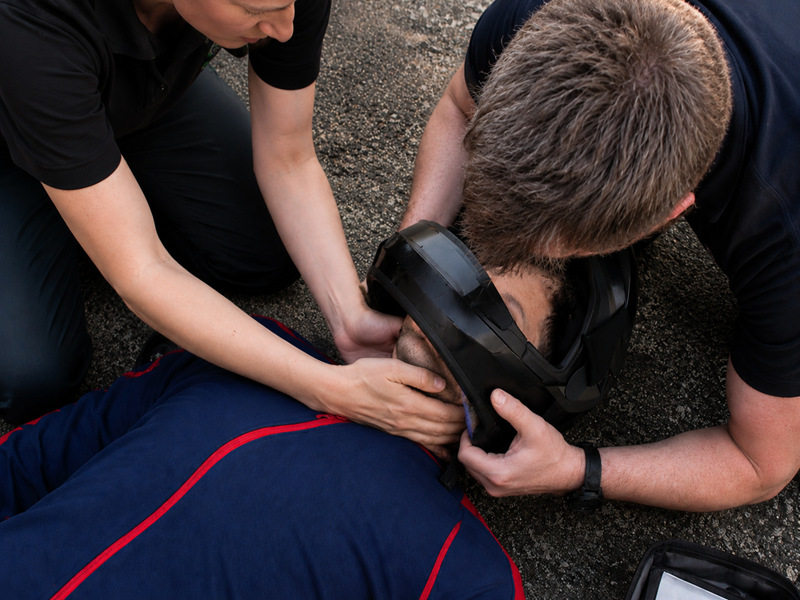
Remote & High-Risk Trauma Response Training
Whether operating in forestry, remote infrastructure, outdoor environments, security operations, maritime settings or other high-risk workplaces, the ability to recognise, assess and manage life-threatening emergencies can mean the difference between life and death.
The Remote & High-Risk Trauma Response programme has been designed for organisations and individuals who require more than standard workplace first aid. Delivered through the QNUK Level 3 Award in First Person on Scene (International) (FPOSi), this intensive practical course develops the confidence, competence and decision-making skills needed to manage serious incidents until definitive medical care is available.
Unlike many classroom-based first aid courses, this programme focuses on realistic trauma management, dynamic casualty assessment and emergency response in challenging environments.
Who Is This Course Designed For?
This course is ideal for organisations and individuals operating in remote, hazardous or high-risk environments, including:
- Forestry and Arboriculture Teams
- Utility and Infrastructure Workers
- Wind Farm Technicians
- Outdoor Activity Providers
- Mountain Leaders and Expedition Staff
- Maritime and Marine Personnel
- Security Teams and Close Protection Operatives
- Search and Rescue Volunteers
- Media and Production Crews
- Remote Site Supervisors
- Lone Workers
- Emergency Response Teams
If your personnel work beyond immediate access to emergency medical services, this course provides the enhanced skills required to bridge the gap until professional medical assistance arrives.
Why Standard First Aid Is Not Always Enough
Many organisations meet their legal requirements through Emergency First Aid at Work or First Aid at Work qualifications.
While these courses are important, they are not designed for:
- Catastrophic bleeding
- Major trauma
- Delayed evacuation
- Remote locations
- High-risk industrial environments
- Casualty management over extended periods
- Complex emergency situations
Personnel operating in these environments often face risks that require a higher level of medical preparedness.
This course equips delegates with practical skills and confidence to respond effectively when incidents become critical.
What You Will Learn
Dynamic Casualty Assessment
Learn how to quickly identify life-threatening conditions and prioritise treatment using structured casualty assessment models.
Delegates develop the ability to:
- Recognise critical injuries
- Prioritise treatment interventions
- Identify deteriorating patients
- Make informed decisions under pressure
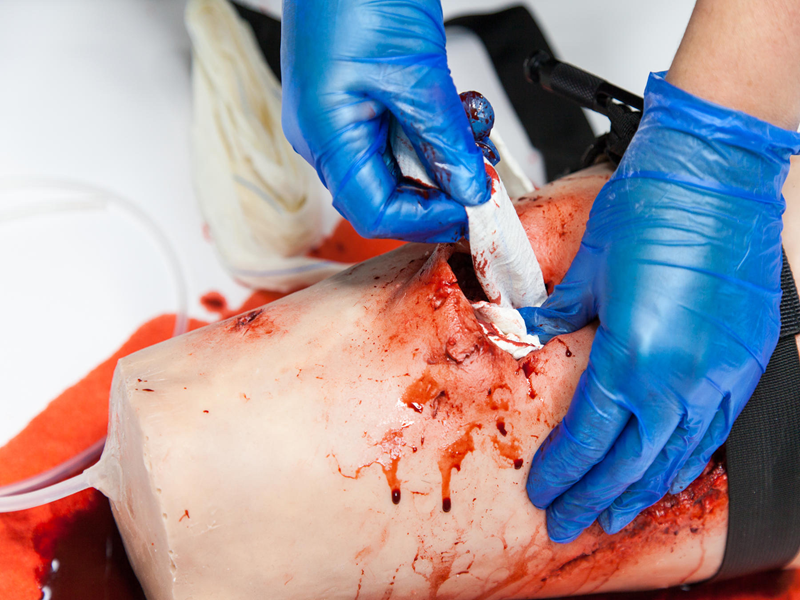
Catastrophic Haemorrhage Control
Uncontrolled bleeding remains one of the leading preventable causes of death following traumatic injury.
Practical training includes:
- Major haemorrhage management
- Tourniquet application
- Haemostatic dressings
- Junctional wound management
- Trauma dressings
- Casualty monitoring
Airway & Breathing Management
Develop practical skills in:
- Airway assessment
- Airway adjuncts
- Oxygen therapy
- Respiratory emergencies
- Casualty positioning
- Ongoing patient monitoring
Trauma Management
Delegates learn to assess and manage a wide range of traumatic injuries including:
- Chainsaw injuries
- Crush injuries
- Falls from height
- Machinery accidents
- Penetrating trauma
- Fractures and dislocations
- Head injuries
- Chest trauma
Medical Emergencies
The course also covers the recognition and management of:
- Cardiac emergencies
- Stroke
- Seizures
- Diabetic emergencies
- Asthma
- Anaphylaxis
- Altered levels of consciousness
Remote Casualty Care
One of the key challenges in remote environments is managing a casualty for prolonged periods before evacuation.
Training includes:
- Casualty monitoring
- Reassessment techniques
- Environmental protection
- Prolonged casualty care principles
- Documentation and handover
Emergency Communications & Evacuation
Delegates develop an understanding of:
- Emergency communications
- Information gathering
- Casualty evacuation planning
- Access considerations
- Working with emergency services
- Incident coordination
Scenario-Based Learning
This is not a course built around PowerPoint presentations.
Delegates are challenged through realistic practical scenarios designed to replicate the environments they work in.
Training exercises may include:
- Remote forestry incidents
- Major bleeding emergencies
- Falls from height
- Multiple casualty incidents
- Remote worker emergencies
- Challenging evacuation situations
These exercises develop confidence, communication skills and decision-making under pressure.
Why Train With Optimal First Aid?
Optimal First Aid specialises in training personnel working in remote, outdoor and high-risk environments.
Our instructors bring real-world operational experience and understand the challenges faced by those working beyond immediate emergency medical support.
Training is practical, relevant and designed to reflect the realities of your workplace rather than generic classroom scenarios.
We focus on developing capability, confidence and competence that can be applied immediately in the field.
Course Information
Qualification
QNUK Level 3 Award in First Person on Scene (International) (FPOSi)
Duration
Typically 3 Days
Assessment
Practical assessments and multiple-choice examination
Certification
Successful delegates receive the nationally recognised QNUK Level 3 Award in First Person on Scene (International)
Location
Available throughout Devon, Cornwall, the South West and across the UK.
Bespoke Industry-Specific Delivery
This course can be tailored to your operational environment.
Specialist versions are available for:
- Forestry & Arboriculture
- Utilities & Infrastructure
- Security Teams
- Maritime Operations
- Adventure & Expedition Providers
- Search & Rescue Organisations
- Remote Worker Teams
Training scenarios, discussions and practical exercises can be adapted to reflect your specific workplace risks and operational requirements.
Our Venue
Our training centre is located in Newton Abbot, Devon, providing a comfortable and practical learning environment.
Optimal First Aid, Kingdom House, Brunel Rd, Newton Abbot TQ12 4PB
Your Venue
Prefer this course at your venue?
For group bookings, training at your own venue can often be a more convenient and cost-effective.
Contact us for a quote.
Build a More Capable First Response Team
When serious incidents occur in remote and challenging environments, waiting for emergency services is not always an option.
Equip your team with the skills, confidence and recognised qualification required to respond effectively when it matters most.
Contact Optimal First Aid today to discuss Remote & High-Risk Trauma Response training and upcoming QNUK FPOSi courses.
EXCELLENT Based on 298 reviews
 Posted on Google
 Suzy CraneFantastic explanations given during this First Aid training in Devon. Best I’ve had.Posted on Google
 Ethan PaynterExcellent day of First aid training. Toby came out to our work place and was very competent in his delivery. All content was very well taught. There was a real emphasis on being practical and hands on especially with the CPR training and AED training. Im confident I can apply what ive learnt today Would recommendPosted on Google
 Chloe LeeGreat first aid training, informative, fun and hugely helpful.Posted on Google
 Indica SauceVery good course, the trainer was very knowledgeable and the training methods were relatable and professional.Posted on Google
 Paul WallisFrom start to finish, felt very relaxed and professional. Would recommend anyone looking to get a refresher course or any of the first aid courses as the team make you feel very welcome. Thanks to Toby and Erica for a great day. CheersPosted on Google
 Rachael SkinnerBrilliant course and leader Toby Osborne. The practical side of this course brings the theory to life and makes the learning process an enjoyable and fun experience. Definitely prepares you for life outdoors! Thank you Optimal First Aid.Posted on Google
 Rob BonOptimal First Aid Devon, provided a great course, that was delivered in a highly professional manner, with great instructional technique. Instructor knowledge and training aids were exceptional throughout. I would highly recommend this training provider.Posted on Google
 Josh “Jal” AllenAbsolutely fantastic experience. Toby made everything a great balance of practical and theory, relevant information for our group, and was superbly approachable for any and all questions! Will definitely be booking with these guys again!
Contact Us
Have a question about our FPOS course or need help choosing the right training for your role? Whether you’re an instructor, expedition leader, or working in remote or outdoor environments, we’re here to help. Complete the form below and a member of our team will get back to you within 24 hours with clear, practical advice.